
My advice: start with daily routines, agreed calls home and one trusted adult at school. Help your daughter practise looking after her belongings, pack a familiar keepsake and check the school’s contact rules before planning calls in IST.
I’d focus on a few small steps:
- Listen without pressure. Let her talk about homesickness without expecting a happy update.
- Make room for friendships. Encourage her to try one activity she enjoys.
- Support independence. Ask what she has tried before stepping in, and remind her that asking for help is part of learning.
- Work with staff. Agree on support and a review date if she struggles.
<u>There is no fixed deadline for settling in.</u> I wouldn’t wait if distress affects her sleep, eating or daily life. Seek counselling or medical help when needed, and treat bullying, abuse or safety concerns as urgent.
New to boarding; Dorms, Communication and overcoming home sickness
sbb-itb-9c83bad
Plan Regular Contact With Home
Once your daughter knows whom to approach at school, agree on a simple routine for staying in touch. Check the school’s current rules before setting call or visit times. Use its contact page to ask about device rules, call windows and emergency contacts. Visits require prior approval from the Principal or Warden, along with parent verification.
Schedule Calls During Free Time
Agree on call times in Indian Standard Time (IST) with your daughter and the matron. Ask when she has free time in the recreation room, and keep calls clear of study, meals, sports and rest.
Ask about her meals, classmates and activities, then give her time to talk. Keep goodbyes calm. If she misses a call, follow the agreed school contact route. If she needs more contact, review the routine with staff.
Use Reassuring Words and Avoid Added Pressure
Regular contact should offer comfort, not add pressure. Let her talk about a difficult day without expecting a cheerful update or making her feel responsible for your feelings.
Listen calmly, acknowledge her homesickness and stick to agreed check-ins. Help her work through normal homesickness with staff support, rather than relying on emotional goodbyes, constant calls or promises to collect her immediately.
If her distress continues, ask staff to review her support plan with the counsellor.
Help Her Handle Homesickness and Feel at Home
Once calls become regular, use them to help her talk through homesickness and take things one small step at a time.
Listen and Agree on One Next Step
Give her time to speak, acknowledge what she misses and agree on one small next step, such as attending the next scheduled activity. Afterwards, ask staff how she managed and whether she took that step.
After responding to her feelings during the first call, bring the focus back to daily life and friendships.
Help Her Make Friends and Join Activities
Encourage her to introduce herself to one or two classmates and sit with others at meals. If joining a group feels difficult, ask whether a trained matron or personal counsellor can help her join a house activity or hobby club. Shared activities build teamwork and help her feel part of the school community.
Let her choose one activity to try, rather than filling every free period. DGS offers sports such as badminton and basketball, arts activities such as music and painting, and leadership opportunities. Taking part gives her a shared interest to talk about, though it won’t resolve every friendship difficulty.
As she settles in, shift from solving problems for her to helping her work through them.
Support Her as She Learns to Do More Herself
Before stepping in over a minor problem, ask what she has tried and whom she could approach for help. Younger pupils may need smaller steps, while older students should take more responsibility for their belongings, study time and concerns. These routines can make boarding feel easier to handle.
Recognise her effort, responsible choices and willingness to ask for help – not just her marks. Support her time management, communication and resilience without expecting her to handle everything alone.
Work With Boarding Staff and Watch for Distress
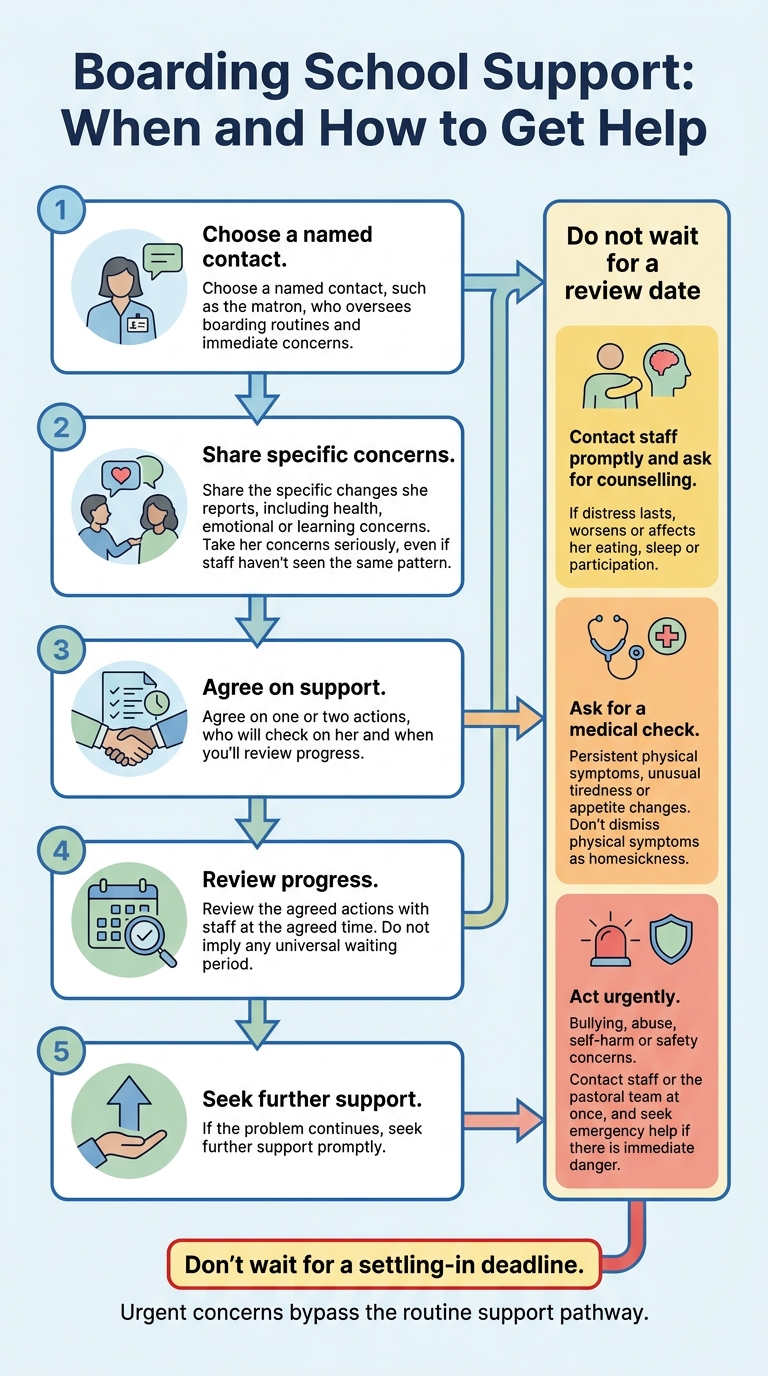
Boarding School Support: When and How to Get Help
Agree on Support and When to Review It
If she continues to struggle with settling in, work with boarding staff early to support her independence. Choose a named contact, such as the matron, who oversees boarding routines and immediate concerns. Share the specific changes she reports, including health, emotional or learning concerns. Take her concerns seriously, even if staff haven’t seen the same pattern.
Agree on one or two actions, who will check on her and when you’ll review progress. If the problem continues, seek further support promptly.
Get Help for Lasting or Serious Distress
If distress lasts, worsens or affects her eating, sleep or participation, contact staff promptly and ask for counselling. Don’t wait for a settling-in deadline. Early support can help her stay independent and prevent difficulties from becoming crises. Dundlod Girls’ School provides counselling services for stress, homesickness and other emotional concerns.
Ask for a medical check if she has persistent physical symptoms, unusual tiredness or appetite changes. Dundlod Girls’ School’s infirmary has a qualified doctor and nurses available round the clock, with hospital referral for serious emergencies. Don’t dismiss physical symptoms as homesickness.
Treat bullying, abuse, self-harm or safety concerns as urgent. Contact staff or the pastoral team at once, and seek emergency help if there is immediate danger.
Conclusion: Stay Supportive as She Gains Independence
Help your daughter practise daily routines, agree on a regular contact schedule and choose one activity that helps her feel at home.
Stay warm without taking over. Keep your messages calm, brief and consistent, and give her room to speak for herself.
Remind her that independence also means speaking up when something feels wrong. Asking for help is part of becoming independent – not a setback.
FAQs
How can I prepare my daughter for sharing a dormitory?
Sharing a dormitory helps her build independence, responsibility and teamwork as she learns to manage her routine and respect others’ space. She’ll still have her own bed, study table and almirah for her personal belongings – a space she can call her own.
Shared living also gives her a chance to form lasting friendships in a supportive, family-like atmosphere. She won’t have to settle in alone: trained matrons and approachable staff are always available to help with daily routines, sharing space and adjusting to life with other students.
What should I say if she asks to come home?
Respond calmly. Reassure her that missing home is normal and that you take her feelings seriously. Remind her that the hostel offers a “home away from home”, with trained matrons, round-the-clock supervision and personal counselling if needed.
Confirm the communication routine you’ve agreed on and offer regular check-ins, rather than changing the plan immediately. If her distress continues, ask the matrons or counsellors for extra support straight away.
How can I help if she struggles to make friends?
Encourage your daughter to take part in extracurricular activities and the school’s community service programmes. These give her natural opportunities to spend time with peers and work as part of a team. Our trained matrons and staff mentor her as she settles into school life and builds friendships.
If she still finds social situations difficult, our counselling services can offer extra support, helping her feel more confident during the transition.